


Should You Move Out During Floor Sanding? What to Expect
If you are planning to restore tired timber floors, one of the first questions you may ask is simple: should you move out during floor sanding? The answer depends on the size of the job, the condition of the floor, the finish being used, and how comfortable you are with noise, dust, and temporary disruption. For some households in Balham, staying at home during the work is perfectly manageable. For others, especially families with young children, pets, allergies, or multiple rooms being treated at once, leaving for a short period can make life much easier.
Professional floor sanding in Balham can completely transform worn floorboards, parquet, and hardwood flooring. It removes surface damage, smooths uneven areas, lifts old finishes, and prepares the timber for a fresh protective coat. The results can be stunning. But while the finished floor may look calm, clean, and beautifully restored, the process itself is active, noisy, and sometimes inconvenient.
In this guide, we will explain exactly what happens during a professional floor sanding project, whether you need to move out, what daily life is like while the work is underway, and how to decide what is best for your home.

Why homeowners worry about staying in during floor sanding
It is normal to feel unsure before any restoration work begins. Unlike painting a single wall or changing a light fitting, wood floor sanding affects the way you use your home. Furniture has to be removed, rooms may be out of bounds, machinery will be running, and there is usually a drying and curing period after the sanding is complete.
Most concerns come down to five practical issues:
1. Noise
Floor sanding machines are much quieter than older equipment used years ago, but they still produce a noticeable level of sound. Belt sanders, edging sanders, and extraction units all create noise that can make working from home, resting, or caring for small children more difficult.
2. Dust and air quality
Modern dust-controlled systems capture the vast majority of sanding dust, but no process is ever 100% dust-free. Fine particles can still settle around the work area, especially during preparation, edging, or clean-up.
3. Access to rooms
Once a room is being sanded and sealed, access becomes limited. You may not be able to walk on the floor for a set period, and furniture cannot be returned immediately.
4. Smell of finishes
The smell depends on the product used. Some modern water-based finishes have relatively low odour, while certain oil-based products can smell stronger and linger longer.
5. Household disruption
If your living room, hallway, bedroom, or entire ground floor is being treated, staying in the house may become awkward even if it is technically possible.
That is why many homeowners booking floor restoration services ask whether moving out is necessary.
The short answer: you do not always need to move out
In many cases, you do not need to move out during floor sanding. If only one room is being sanded, if the contractor is using modern dust-controlled equipment, and if a low-odour finish is selected, many people stay at home without major problems.
However, there are situations where moving out for a night or two is the better option:
- the whole property is being sanded
- you have babies or very young children
- someone in the household has asthma, allergies, or respiratory sensitivity
- you have pets that become stressed by noise or unfamiliar activity
- you work night shifts and need daytime sleep
- your main access routes, such as hallways and stairs, are included in the work
- strong-smelling finishes are being used
- you simply want to avoid disruption and let the work progress faster
So the real question is not just “can you stay?” but “will staying be practical and comfortable?”
What happens during the floor sanding process?
Understanding the process makes the decision much easier. A professional wood floor restoration project usually follows these stages:
Room preparation
Before sanding begins, the room needs to be cleared as fully as possible. Furniture, rugs, curtains touching the floor, freestanding lamps, and decorative items should be removed. In some cases, doors may need to be adjusted or temporarily taken off if clearance is tight.
At this stage, contractors may also inspect the floor for:
- protruding nails or screws
- loose boards
- damaged parquet blocks
- old adhesives or bitumen
- previous coatings such as wax, varnish, or paint
- gaps between boards
Good preparation is one of the main reasons professional floor sanding services achieve such consistent results.
Sanding the main floor area
The main sanding machine removes the old finish and smooths the surface. Several passes are usually made using progressively finer abrasives. This levels out wear, scratches, scuffs, and dull patches.
This is often the noisiest part of the process. If you are planning to stay at home, this is the period you will notice most.
Edging and detailed sanding
The larger machine cannot reach right to the edges, corners, or around radiators. Smaller edging tools and detail sanders are used to finish these areas. These tools can be slightly more disruptive in compact rooms because they operate close to walls and skirting boards.
Repairs and gap filling
If needed, repairs are carried out before the final sanding pass. This might involve replacing damaged boards, securing loose sections, re-bonding parquet blocks, or filling fine gaps. Quality parquet floor restoration and traditional floorboard work often depend on this stage.
Final sanding and cleaning
Once the floor is level and repairs are complete, the final sanding pass refines the surface. Then the room is vacuumed thoroughly so the finish can bond properly.
Sealing and finishing
A sealant, lacquer, hardwax oil, or another protective coating is applied. The choice of finish affects appearance, durability, smell, drying time, and how quickly the room can be used again.
This stage is usually the most important when deciding whether to stay in the property, because access to the room becomes restricted and odours may increase temporarily.

When staying in the house is usually fine
You can often remain at home during floor refinishing if the following apply:
- only one room is being worked on
- the rest of the house remains usable
- there is a clear way to move around without walking over treated floors
- the contractor uses efficient dust extraction
- a quick-drying water-based finish is chosen
- nobody in the home is especially sensitive to noise or smells
For example, if you are sanding a spare bedroom or a front reception room while the rest of the home remains unaffected, staying put may be the simplest option.
Some Balham homeowners even prefer to be present so they can see progress, answer questions, and make decisions about finish colour, sheen level, or repairs as the work develops.
When moving out is the smarter choice
Even though moving out is not always required, it can be the best solution in certain situations.
Whole-home sanding projects
If the hallway, landing, bedrooms, and living spaces are all included, it may be hard to live normally. Getting from one room to another can become awkward, and the work often progresses more smoothly if contractors have unrestricted access.
Homes with children
Young children may be unsettled by noise, curious about tools, and likely to wander into work zones. It is often easier and safer to stay elsewhere briefly.
Homes with pets
Dogs and cats can be distressed by sanding equipment and changes to their routine. They also need safe access to food, bedding, and outdoor areas without walking on wet finishes.
Health sensitivities
Anyone with asthma, allergies, migraines, or sensitivity to odours may feel more comfortable away from the property during sanding and finishing.
Tight timeframes
If you want the work completed as efficiently as possible, an empty property can help. Contractors can often move faster when they do not need to work around daily household routines.
In these cases, stepping out for one or two nights can reduce stress and make the whole experience easier.
How dusty is modern floor sanding really?
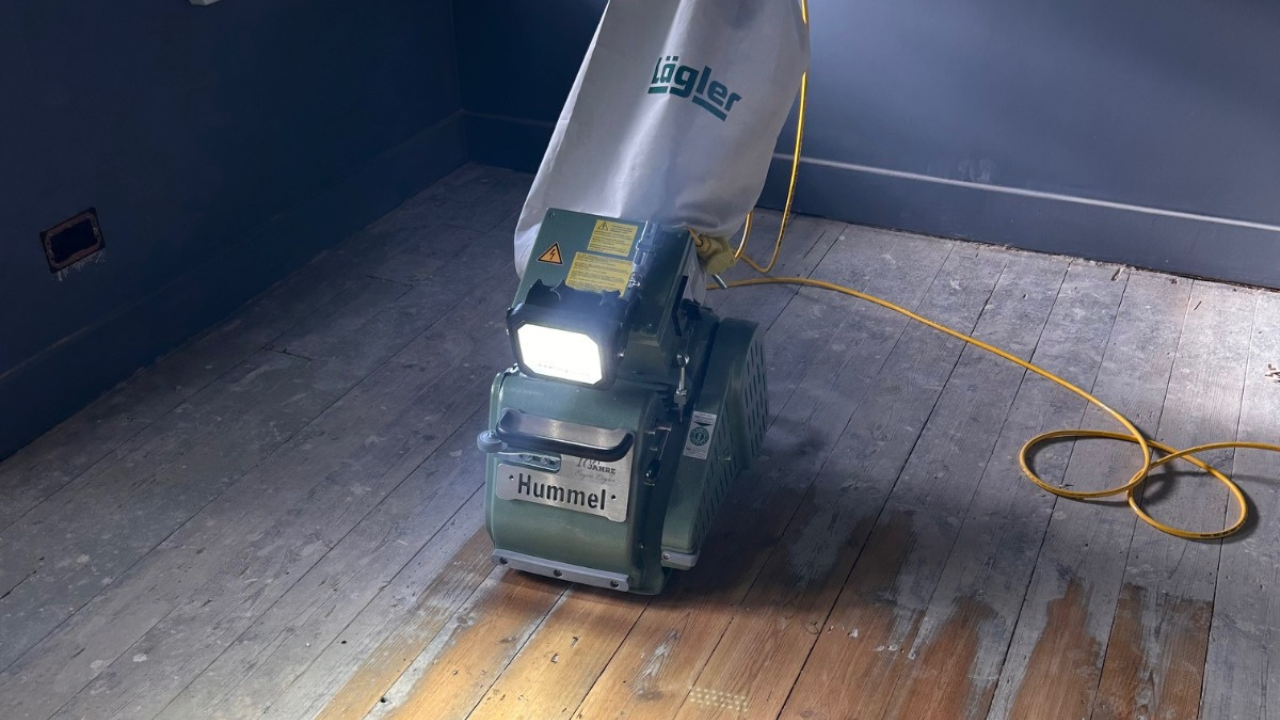
One of the biggest myths about sanding is that it leaves the entire house covered in dust. Years ago, that reputation was often deserved. Today, professional dust-free floor sanding equipment captures most airborne dust at source.
That said, “dust-free” usually means very low dust, not literally zero dust. Some fine particles may still appear around edges, doorways, skirting boards, and adjoining spaces. Preparation and containment matter. A careful contractor may use:
- sealed extraction systems
- protective sheeting
- doorway barriers
- thorough vacuuming between stages
- careful clean-up after completion
If dust is your main concern, ask in advance what equipment and protection methods will be used. That will tell you far more than a vague promise.
What about the smell?
The smell during floor sealing and finishing depends mostly on the product chosen.
Water-based finishes
These are popular because they dry faster, have lower odour, and leave a clean, natural-looking finish. For many households, they make it easier to stay in the property.
Oil-based or solvent-heavy finishes
These can offer a rich appearance and strong durability in some settings, but they usually produce a stronger smell and longer drying period.
Hardwax oils
These are valued for their natural look and repairability, but odour and curing time vary by brand and formula.
Even if the smell is not overwhelming, some people simply prefer not to sleep in a freshly sealed home. That is a comfort decision as much as a technical one.
How long before you can walk on the floor?
This depends on the finish used, room temperature, ventilation, and the number of coats applied. As a general rule:
- light foot traffic may be allowed after a short drying period
- furniture often needs to wait longer
- rugs should usually stay off for an extended period
- full curing can take significantly longer than surface drying
This is why moving out can sometimes help, even if sanding itself is manageable. The challenge is not only the noise, but also living around floors that are drying and cannot be used normally.
Always follow the aftercare guidance given by your floor sanding specialists, because walking on a floor too early or replacing furniture too soon can mark the finish.
Tips if you plan to stay at home during floor sanding
If you decide not to move out, a little planning makes a big difference.
Choose the right rooms in the right order
Try to schedule the work so key living spaces remain available. If possible, avoid sanding all access routes at once.
Remove more than you think you need to
A properly cleared room helps the work move faster and reduces stress on the day.
Protect unaffected areas
Close doors, move soft furnishings away from adjoining rooms, and keep valuables stored safely.
Plan for noise
If you work from home, arrange calls around sanding hours or work elsewhere for the noisiest part of the day.
Think about pets and children
Even if you stay in the property, it may still help to have pets or children elsewhere during active sanding hours.
Ventilate the home
Good airflow can help finishes dry and reduce odours, provided the contractor agrees it is appropriate for the products being used.
Questions to ask before the job starts
If you are trying to decide whether to move out, ask these practical questions before booking:
- How many rooms will be out of use at the same time?
- What finish do you recommend and how strong is the odour?
- How long before we can walk on the floor?
- How long before furniture can go back?
- Will hallways or stairs be blocked?
- How much dust should we realistically expect?
- Are there any special concerns for children, pets, or allergy sufferers?
- Can the work be phased to make staying easier?
A trustworthy floor sanding company in Balham will answer these clearly rather than giving vague assurances.
Is moving out worth it financially?
Some homeowners hesitate because temporary accommodation adds cost. That is understandable. But there is another side to it. If moving out for a short period allows the work to be completed faster, reduces household stress, and protects the final finish from accidental damage, it can still be worthwhile.
In many cases, people do not need a hotel at all. Staying with friends or family for a night or two may be enough, especially during the sealing stage.
Final verdict: should you move out during floor sanding?
For many homes, you do not have to move out during floor sanding. If only one area is being treated and modern low-dust methods are being used, staying at home is often possible. But if the work covers large areas, involves strong-smelling finishes, or affects children, pets, or anyone with breathing sensitivities, moving out temporarily may be the better experience.
The key is to think beyond whether it is technically possible to stay. Ask whether you will be comfortable, whether you will still have access to the spaces you need, and whether leaving briefly will make the job easier for everyone.
Professional floor sanding and finishing is one of the best ways to restore character, value, and beauty to timber floors. With the right preparation and clear expectations, the process is far less daunting than many people imagine.
If you are planning a project and want honest advice on whether you should stay or leave during the work, visit Floor Sanding Balham to explore expert floor restoration services and get guidance tailored to your property.


